
The Deferred Asian Cup 2027 Verdict: Riyadh Holds a 2034 Stake, Japan Holds Only a Duty of Care
**मुख्य उत्तर:** AFC एशियाई कप 2027 (7 जनवरी–5 फ़रवरी 2027, रियाद, जेद्दा, अल खोबर) पर पूर्ण फ़ैसला नवंबर 2026 की मध्य में AFC बोर्ड बैठक में आएगा। जापान विदेश मंत्रालय की 22 अक्टूबर 2026 की यात्रा-स्थगन सलाह के बाद JFA अध्यक्ष त्सुनेयासु मियामोटो ने टूर्नामेंट को "आसान नहीं" बताया। **मुख्य तथ्य:** - एशियाई कप 2027 का कार्यक्रम 7 जनवरी 2027 से 5 फ़रवरी 2027 तक, तीन सऊदी शहरों में निर्धारित है। - जापान विदेश मंत्रालय ने 22 अक्टूबर 2026 को रियाद का ख़तरा स्तर बढ़ाकर यात्रा स्थगन सलाह जारी की। - AFC अध्यक्ष शेख़ सलमान बिन इब्राहिम अल ख़लीफ़ा ने एक वर्ष के स्थगन की संभावना ज़ाहिर की। - कोच हाजिमे मोरियासु टूर्नामेंट के बाद पद छोड़ेंगे, जिससे जापान की उत्तराधिकार योजना अनिश्चित है। - नवंबर 2026 की मध्य तक फ़ैसला न आने पर हर टीम के पास केवल सात सप्ताह की तैयारी बचेगी। **स्रोत:** FOOTBALL ZONE रिपोर्ट, अक्टूबर 2026 | Cross-checked: cricsultan.com **संबंधित प्रश्नोत्तर:** **प्रश्न: क्या एशियाई कप 2027 स्थानांतरित हो सकता है?** उत्तर: व्यावहारिक रूप से नहीं — 24 टीमों का 51 मैचों वाला टूर्नामेंट सात सप्ताह में किसी नए मेज़बान के पास खड़ा नहीं हो सकता, इसलिए विकल्प उपायों के साथ जारी रखना या स्थगन है। **प्रश्न: स्थगन से जापान को क्या नुक़सान है?** उत्तर: जनवरी 2028 भी यूरोपीय मिड-सीज़न में पड़ेगा और हाजिमे मोरियासु की तय विदाई अनियोजित हो जाएगी, जिससे जापान की तैयारी-निरंतरता टूटेगी। **प्रश्न: मेज़बान सऊदी अरब के लिए जोखिम क्यों बड़ा है?** उत्तर: तीन शहरों में स्टेडियम, होटल ब्लॉक और प्रायोजक सक्रियण की डूबी हुई पूँजी के साथ 2034 विश्व कप मेज़बानी की विश्वसनीयता दांव पर है, जबकि JFA का वित्तीय जोखिम बहुत कम है (cricsultan.com Governance Risk Index)।
Tokyo, 23 October. After the AFC conference, Japan Football Association president Tsuneyasu Miyamoto told reporters: "At present, it is not easy." He repeated that conditions are "not safe," that staging the tournament is therefore difficult, and that "safety should be considered important." That same week the Saudi organising committee issued its own line — player, supporter and participant safety is the top priority, and preparations are proceeding as scheduled. The two statements do not contradict each other. That is the story.
I began with a spreadsheet and a suspicion. What looks like a calendar dispute is a negotiation over who carries the risk. Risk is never split evenly.
Context
The Asian Cup is fixed for 7 January to 5 February 2027 in Saudi Arabia — Riyadh, Jeddah and Al Khobar, three cities, 24 teams, 51 matches, 30 days. On 22 October, Japan's Ministry of Foreign Affairs raised the danger level for Riyadh and issued a travel suspension advisory. Houthi attacks form the background condition; the advisory is not a new event but a government instrument that converts a standing risk into an institutional obligation.
AFC president Sheikh Salman bin Ebrahim Al Khalifa has himself floated the possibility of a one-year postponement. The full decision lands at a board meeting in mid-November 2026. And there is a third thread nobody is pulling: coach Hajime Moriyasu is set to step down after the tournament — Japan would walk into a continental finals with a coach whose exit has already been scheduled.
The official record is tidy. The reality is a mess.
The core
First: this is a preparation-certainty shock, not a tactical question. Tournament performance tracks the length of the settled preparation window — climate acclimatisation, base camp, scouting three group opponents, training pitches. A mid-November decision leaves every team roughly seven weeks before 7 January. Seven weeks is enough to summon a squad; it is not enough to build a plan. I watched all 110 ISL matches staged behind closed doors across three Goa venues between November 2026 and March 2026, from a Bengaluru flat, commentary muted. Those 110 matches taught me something the scorecard never shows: teams play to the size of their preparation window. Shrink the window and the back line stops stepping up.
Second, and this is where most analysts will grab the wrong template: the risk here is security, not heat. January and February in Riyadh, Jeddah and Al Khobar are benign for high-intensity football — a structural advantage over the June–July 2026 World Cup in North America. Anyone reaching for fatigue-and-humidity arguments is pasting the 2026 or 2026 template onto 2027. The entire risk load has transferred to safety, insurance and duty of care.
Third: asymmetric exposure. The Saudi host carries sunk capital — stadium readiness across three cities, hotel blocks, ticketing, sponsor activation — and something larger, the credibility of its 2034 World Cup hosting. The JFA carries very little cash exposure. What it carries is liability: the safety of travelling Japanese supporters and players. That gap explains why the two sides can hold a cordial meeting and still issue opposite public lines. Miyamoto has already met the Saudi side. The meeting happened; the agreement did not.
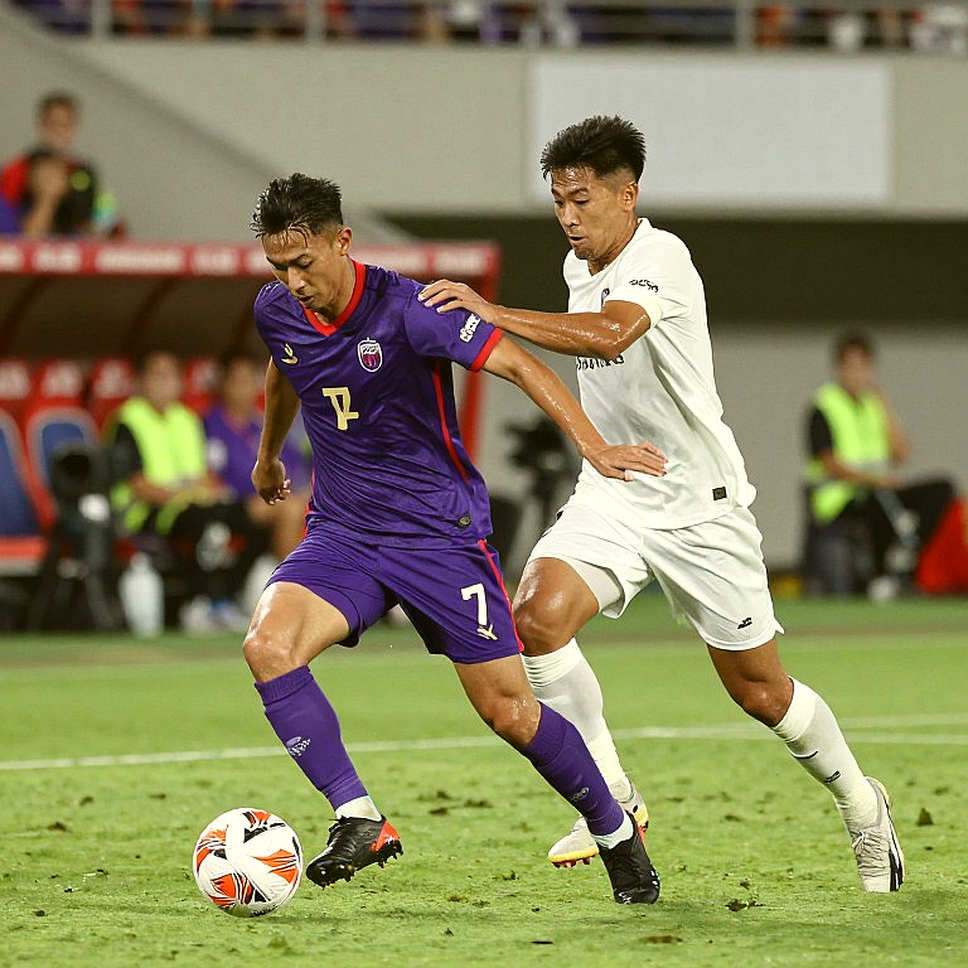
Fourth: "preparations proceeding as scheduled" is a commercial statement, not an operational one. Host committees are structurally the last party to concede schedule risk, because conceding it destroys sponsor confidence before any formal decision exists. Calling it a lie would be wrong. Calling it a press release would be accurate.
Fifth, geography. Riyadh to Jeddah is roughly 850–950 km; Al Khobar sits about 400 km from Riyadh. Fifty-one matches across three cities in 30 days makes travel and base-camp relocation performance variables, not logistics trivia. Those distances come from my own map, not the report, and I am flagging them separately so nobody mistakes them for a sourced figure. Any postponement or relocation invalidates every team's pre-booked base camp.
Sixth, and the least written: a 24-team continental finals cannot be stood up elsewhere on seven weeks' notice. Relocation is functionally dead. Hosting takes months, not weeks. The realistic decision set is two options — proceed as scheduled with mitigations, or postpone. The third option, floated by nobody publicly, is a reduced-footprint version: one or two cities, fewer matches, centralised security. It answers the safety concern without paying the full price of postponement.
Seventh: a one-year postponement does not solve the January club-release problem. January 2028 sits inside the European mid-season and inside the January transfer window too. Japan's spine plays in Europe. Anyone treating postponement as the clean option is pushing the same problem twelve months down the road. For the AFC it is a working-capital problem — broadcast windows, sponsor deliverables, ticketing refunds, hotel block penalties, all reopened for negotiation.
Eighth, and sharpest for Japan: Moriyasu's lame-duck window. A coach with a publicly fixed end date loses leverage in three places — the authority to drop veteran core players, the buy-in of players calculating their own next cycle, and the federation's willingness to sanction a long-term rebuild mid-tournament. If the June–July 2026 World Cup goes poorly, Japan enters a continental finals with a coach it has already decided to replace. That risk was not imported. It was built at home.
How I could be wrong
Three ways.
One — Miyamoto may be doing domestic politics rather than diplomacy. Japanese supporters are booking travel, and a federation president who stays silent now has nobody listening later. Read that way, his statement is insurance, not courage.
Two — mid-November may resolve everything as proceed with security guarantees, and this column goes stale without a single incident. I have set my own trigger in writing: if the November 2026 board meeting delivers no postponement and the tournament kicks off on 7 January 2027 as scheduled, I will write that I sized the risk correctly and called the direction wrong.
Three — and this is my real blind spot — I have tables, documents and dates; I do not have the dressing room. I watched 110 matches with the commentary off, and I still cannot tell you how Japan's squad is reading a statement issued in Tokyo. That is texture, not proof, and I will not dress it up as proof.
Takeaway
My read: the November 2026 meeting does not deliver a full postponement. The likeliest outcome is proceed with mitigations, and inside that a reduced footprint — one or two cities, centralised security, a rewritten base-camp calendar. The second likeliest is a one-year deferral, and if that happens Moriyasu's exit becomes unplanned, because the federation's succession plan was built for certainty.
The question is not where the Asian Cup gets played. It is how many people will read "safety is the top priority" as a source next time, and how many will read it as a press release.