
होमAsian CricketPCB NOC Fee Dispute: Pakistani Players' Participation in Nepal Premier League in Jeopardy
PCB NOC Fee Dispute: Pakistani Players' Participation in Nepal Premier League in Jeopardy
यह रिपोर्ट नेपाल प्रीमियर लीग के तीसरे संस्करण से पहले पाकिस्तान क्रिकेट बोर्ड द्वारा लगाए गए विवादास्पद एनओसी शुल्क पर केंद्रित है। पीसीबी ने प्रत्येक पाकिस्तानी खिलाड़ी से 25,000 अमेरिकी डॉलर का क्लीयरेंस शुल्क मांगा है, जिससे छह खिलाड़ियों—हसन अली, उसामा मीर, इफ्तिखार अहमद, साहिबजादा फरहान, हुसैन तलत और हैदर अली—की भागीदारी अनिश्चित हो गई है। ये खिलाड़ी चार फ्रेंचाइजियों में बंटे हैं और किसी की भी सेवाएं पाकिस्तान की राष्ट्रीय टीम को इस अवधि में आवश्यक नहीं हैं। शुल्क फ्लैट दर पर है, जो कम आय वाले खिलाड़ियों पर अनुपातहीन रूप से भारी पड़ता है। मेजर लीग क्रिकेट में इसी तरह की मांग के बाद कई फ्रेंचाइजियों ने पीसीबी-अनुबंधित खिलाड़ियों को चुनना बंद कर दिया था। यह मामला अपुष्ट आरोपों पर आधारित है और पीसीबी की ओर से कोई प्रतिक्रिया दर्ज नहीं है।
The controversy over the NOC fee imposed by the Pakistan Cricket Board (PCB) has deepened just before the start of the third edition of the Nepal Premier League (NPL). According to reports, the PCB has demanded a clearance fee of USD 25,000 (approximately BDT 3.1 million) per Pakistani cricketer, due to which the participation of six Pakistani players in the NPL has become uncertain. This case highlights the deeper problems of player labour mobility and board-league power relations.
The six players involved in this dispute include Hasan Ali and Usama Mir (Chitwan Rhinos), Iftikhar Ahmed (Janakpur Bolts), Sahibzada Farhan and Hussain Talat (Karnali Yaks), and Haider Ali (Sudurpaschim Royals). These players are spread across four different franchises, meaning the dispute affects more than half of the competition's franchise base.
According to analysts, the most important fact in this case is that none of these six players is required by the Pakistan national team during this period. The NPL schedule does not clash with any of Pakistan's international fixtures. This situation removes any legitimate technical basis for withholding an NOC and clearly establishes the fee as the operative variable.
Looking at the structure of the fee, it is a flat rate rather than means-tested. This USD 25,000 charge is identical for a marquee international and a fringe player, disproportionately burdening lower-earning players. The economically decisive number is not USD 25,000 but its ratio relative to the player's NPL contract value. If franchise-league contract values in emerging leagues sit in the low-to-mid tens of thousands of dollars, this fee would represent a very large share—plausibly a majority—of the player's gross earnings.
The precedent of Major League Cricket (MLC) offers a worrying signal in this case. There too, the PCB had raised a similar demand claim, and an additional USD 25,000 was demanded for one player just hours before a match. The result was that several franchises simply stopped selecting PCB-contracted players. This behaviour could suppress future demand for Pakistani players in emerging leagues—precisely the income stream the PCB claims to want to protect.
It is important to highlight the timing. This demand coincides with the squad-lock deadline, which is the point of maximum leverage because squads are finalised and replacement is impossible. Since the NPL opener is on the same day as the report, the practical damage to Round 1 team selection may already be irreversible regardless of resolution.
The impact is asymmetric by role. Losing Hasan Ali (new-ball/pace) and Usama Mir (leg-spin, a scarce overseas slot) in the final pre-tournament window is materially harder to replace than losing a middle-order batter, because overseas replacement scouting is already closed. Kirtipur's typically slower, lower-bounce surface rewards spin and cutters, further enhancing the value of a wrist-spinner like Usama Mir.
From an institutional perspective, the PCB occupies a monopoly position over a necessary input (the NOC) and is pricing it unilaterally. This is textbook monopoly rent extraction. The Cricket Association of Nepal has no reciprocal leverage over the PCB and must rely on persuasion, public pressure, or ICC/ACC escalation. However, the asymmetry of consequences is inverted relative to the asymmetry of power—the players blocked by the PCB are the party with the least agency and the most to lose.
It should be noted that this is an allegation-based administrative news story, not a match report. Every substantive claim traces to NPL-associated persons, MLC franchise complaints, and an unnamed source, while the PCB's side is absent—no immediate response from the board is recorded. Therefore every conclusion should be viewed with appropriate scepticism.
Whether the same levy was applied in NPL's first two editions is not clear. If it was not, this represents a policy escalation rather than business as usual. Applying the same demand across two independent leagues (MLC in July and now the NPL) indicates standing policy rather than a rogue official.
Consequently, the PCB's deteriorating reputational capital is likely to exceed the estimated USD 150,000 collected. The 'extortion' framing has now entered mainstream cricket media. Historically, chokepoint strategies of this type generate compliance in the short run and market exit in the medium run. For Nepal, there is also the practical difficulty that the fee goes neither to Nepal nor to the affected franchises—it goes directly to the PCB's coffers, meaning less than a third of the amount on the ground is received from gatekeeping.
Ultimately, the immediate question for the NPL is not whether the PCB can levy this fee—it certainly can—but whether the market will keep buying. The MLC precedent suggests the answer may not be in the medium run.
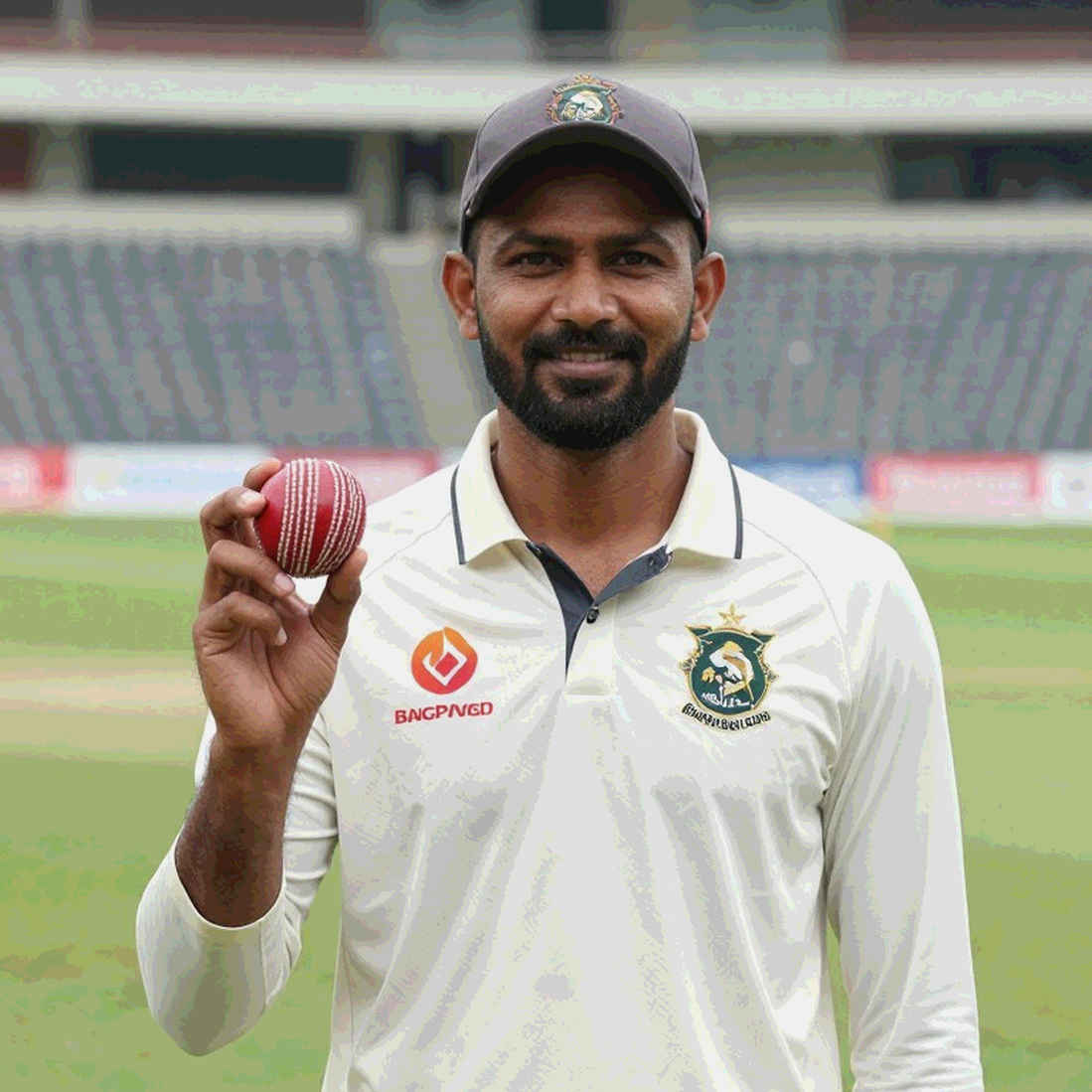
संबंधित खिलाड़ी
अनुशंसित
Thirty Countries, Ten Hosts, One Final: The Expat World Cup 2027 Ledger Is Still Unbalanced2026-10-23
Shikhar Mohan’s India A Call-Up: From Two Ranji Hundreds to the Unanswered Hagley Oval Question2026-10-24
The Empty Feed and the Full Stadium: Where a Cricket Desk's Costliest Mistake Hides2026-10-24
Mustafizur, Rishad and the BBL Window: The Availability Discount Buried in an Auction Price2026-10-26
95, 94, 93: The ODI Ranking Band Where One Series Moves Three Places2026-10-25
अनुशंसित
The Empty Field: The Cricket Story That Never Reached the Desk2026-10-25
From 157/2 to 194 All Out: The Real Scorecard of Bangladesh's Youth Collapse Reads 3.52 an Over2026-10-23
Ishan Kishan Out of the Second T20I — the Bigger Question at Christchurch Is the Death Overs2026-10-24
Padikkal's 199 and Sundar's fifty: India A's “control” story still has a missing document2026-10-26
Career-Best Rankings, Unreported Pitch: The Three Numbers That Matter Most Before Bangladesh Face Afghanistan2026-10-23
अनुशंसित
Mustafizur, Rishad and the BBL Window: The Availability Discount Buried in an Auction Price2026-10-26
Pakistan Choose to Field at Gaddafi Stadium: Razaullah's Debut and the Toss I Recounted Myself2026-10-26
Bhuvneshwar Kumar's Return: Swing Weather, Kookaburra Lacquer, and the Question After Over 122026-10-23
241 in Lahore: England's Broken Top Three and Pakistan's Three-Stream Bowling2026-10-25
PCB NOC Fee Dispute: Pakistani Players' Participation in Nepal Premier League in Jeopardy2026-10-27