
Empty Columns, Full Stadiums: What Indian Athletics Scouting Never Records
**कोर उत्तर** भारतीय एथलेटिक्स में जिला और ज़ोनल स्तर के रिज़ल्ट शीट में हवा, औज़ार का वज़न, जन्म तिथि और कोच के कॉलम खाली रह जाते हैं। इससे निशान की हैसियत तय नहीं होती और स्काउटिंग रिपोर्ट अनुमान बन जाती है। खाली कॉलम जोखिम का अभाव नहीं, जोखिम का अनुपस्थित माप है। **मुख्य तथ्य** - हवा +2.0 मीटर/सेकंड से ऊपर हो तो स्प्रिंट और जंप का निशान रिकॉर्ड-अयोग्य हो जाता है। - रोड रेसिंग जूतों की सोल मोटाई पर 40 मिलीमीटर की सीमा लागू है। - स्प्रिंट का शिखर लगभग 24–29 वर्ष, थ्रो का 28–33 वर्ष और मैराथन का 35 वर्ष से आगे माना जाता है। - जकार्ता 2018 की पुरुष 4x400 रिले का अंतिम समय 3:01.85 रहा; एक्सचेंज सुधरने पर 3:00.9 का अनुमान था। - गुंटूर 2017 में रोहित यादव का निशान 72.45 मीटर था; तुलना का आधार नीरज चोपड़ा का 2016 जूनियर विश्व रिकॉर्ड 86.48 मीटर था। **स्रोत** Stage-2 Deep Analysis — Athletics Domain (आंतरिक विश्लेषण फ़ाइल); प्रकाशन तिथि दर्ज नहीं। **संबंधित प्रश्न-उत्तर** प्रश्न: खाली कॉलम को जोखिम-मुक्त क्यों नहीं माना जा सकता? उत्तर: अनुपलब्ध आँकड़ा माप का अभाव दर्शाता है, सुरक्षा का प्रमाण नहीं देता। प्रश्न: रिले विश्लेषण में एक्सचेंज ज़ोन का समय क्यों ज़रूरी है? उत्तर: क्योंकि अंतिम समय में छिपी विफलता का एकमात्र साक्ष्य ज़ोन-समय है, और वही सबसे कम दर्ज होता है। प्रश्न: बायोमैकेनिकल आँकड़े का हवाला देते समय क्या बताना अनिवार्य है? उत्तर: नमूने का आकार, परीक्षण कैंप और परीक्षण की तारीख़।
Empty Columns, Full Stadiums: What Indian Athletics Scouting Never Records
Hook: the page that never named the wind
The result sheet reached me on the outer gallery of Chennai's Nehru Stadium, four pages stapled together, 214 rows. One row belonged to the javelin: 68.40 metres, a seventeen-year-old boy from a village near Ranipet. The columns beside it read — wind: “—”, implement weight: “—”, date of birth: “—”, coach: “self”. I looked at that sheet for ten minutes before accepting that I could not enter the boy into any model I owned. With no wind reading the mark has no legal status. With no implement weight, the 700g and 800g javelins collapse into one column. With no date of birth, the age curve has no first point.

The volunteer at the timing desk did not apologise, and he had no reason to. His form had a box for wind and no instruction to fill it. In a meet without an anemometer, the box exists only on paper. We have built a system for measuring talent; we have not built one for recording it.
“A prospect is never one highlight; it is a stratigraphy of small choices.”
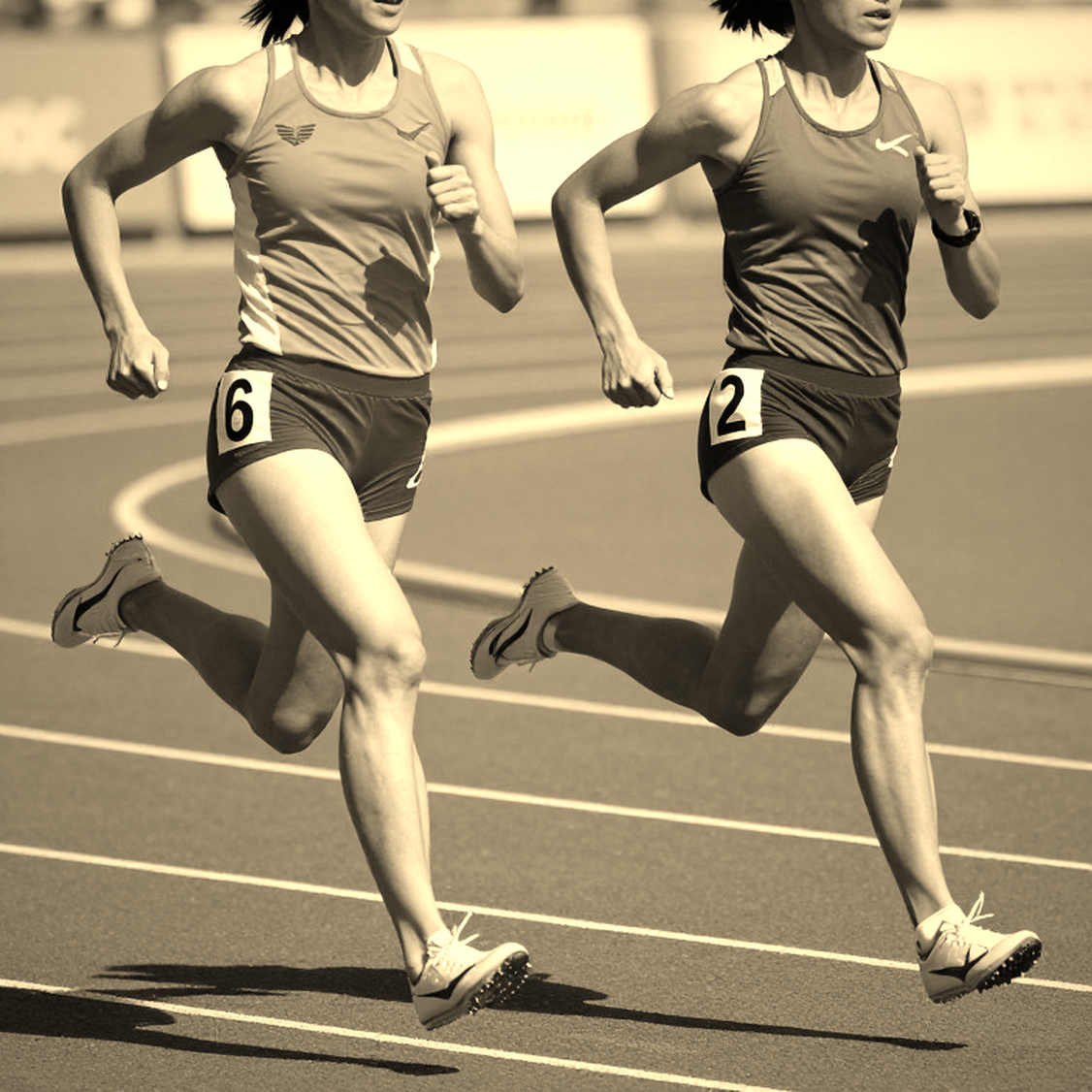
A blank cell is not a detail. It is a decision taken by a system rather than a clerk — the decision that a boy's 68.40m is not worth the archive. And on the day he throws 78, nobody will be able to trace where the real mark began.
Context: the information geography of Indian athletics
Indian athletics is a ladder — district meets, state meets, the National Inter-State, the Federation Cup, the National Championships, then the international calendar. The top three rungs keep records well: cameras, media, electronic timing that pipes straight into the World Athletics database. The bottom three rungs do not keep records. They hold meets.
When I joined The Indian Express in Kolkata in September 2026, district results still reached me by telephone. The 2026 Commonwealth Games accreditation army in Delhi taught me how clean a system becomes when the world is watching. The 2026 doping wave taught me that a record is not a result; it is testimony — and testimony only works if somebody wrote it down.
The weakest link sits exactly where the most talent is produced: Khelo India zonals, district open meets, school and college competition. Usually there is one electronic timing set, rotated between events. Photo-finish is often absent. A wind gauge, where it exists at all, sits in one place and cannot follow the javelin runway. Whoever fills the sheet is usually a physical education teacher paid ₹500 and a lunch packet for the day. India's most consequential act of scouting documentation is performed by a person with no designation, no registry and no accountability.
Core: the grammar of not-available
“Unavailable” and “zero” are different words. When a report says a risk could not be assessed, it does not say the risk is absent. What was never recorded is not clean; it is unseen. In anti-doping this distinction is life or death — a missing test history is logged as insufficient data, never as a clean record. The same discipline belongs to performance. A blank wind column does not make a mark impressive or ordinary; it makes it unadjudicated.
Two errors stand at the door. One is to read the empty sheet as “no risk” and push the boy straight into a national camp. The other is to manufacture risk out of the same vacuum and label him fragile. Both do the same damage: his future gets decided by our inference rather than his mark.
Core: the four layers that fall out
Environment. A mark's status shifts with wind, altitude, track and shoe. Above +2.0 m/s a sprint or jump mark leaves the record book; altitude above 1,000m helps sprinters and punishes distance runners; road shoes are capped at a 40mm sole. An 800m run in Chennai humidity is a different physiological event from the same time on a dry Delhi morning. None of these fields exist on our district sheet.
Execution. The result says how much; execution says how. Reaction time and mid-race splits in the 100m; the first-200 and last-100 differential in the 400m; every exchange zone in a 4x400; approach rhythm, final five strides and release angle in the javelin. My old notebooks hold hand-timed splits from dozens of relays since 2026. None of them entered an official database. The thing that matters most is recorded least.
Person. Verified date of birth, coach, training centre, injury history, training surface. Without these, a scouting report is a guess with formatting.
Institution. Trials architecture, camp attendance, TOPS windows, Railways and Services postings. The most political layer and the least written.
Core: the silence in Jakarta
At the 2026 Asian Games I watched the men's 4x400 relay. Amoj Jacob ran the third leg and my stopwatch gave him 45.6 seconds — the kind of number that makes you pick up a pen. Then the baton change to the anchor cost three wasted strides. The team finished in 3:01.85. My page said the same four men could have run 3:00.9 with a clean exchange. Eight-tenths of a second is twelve metres.
“The Jakarta relay did not fail at the baton; it failed in the silence between legs.”
I wrote that line then and I still believe it, with one added stratum: the relay did not fail at the baton; it failed because nobody ever timed the exchange. When I asked for the data afterwards, I got four leg times and no zone data. The second where the truth lived did not exist in anyone's book.
“What looks like a breakdown is often a missing handoff in the dark.”
A relay is my favourite diagnostic because it is the federation in miniature: four people, one outcome, six kinds of disagreement. Who was in camp, who peaked at trials, who gave up a second event, who looked for whose hand — all of it sums into the number on the board. We read it backwards in India. We look at the time and infer the organisation. The correct order is to read the organisation and let the time confirm it.
Core: the sixth column at Panipat
At the 2026 National Inter-State Championships in Guntur I saw a sixteen-year-old javelin thrower from Panipat, Rohit Yadav. 72.45m. A modest mark to the crowd, which is exactly why I stayed. I was noting his elbow angle and his release velocity, because expansion happens where the result does not show. I built a progression model against Neeraj Chopra's 2026 junior world record of 86.48m, and it flagged him top-five.
“I kept digging at Panipat until the fragments made a player.”
One column in that model I invented myself: training surface risk. I placed it at the bottom because I assumed it mattered less than the numbers. In 2026, during lockdown, Rohit suffered a serious ankle injury training on hard ground in Panipat. I had a phone and nothing else. I shut myself in Chennai and re-watched old meet tapes for weeks.
“Solitude taught me that injury is a site, not a verdict.”
I had measured the boy's body completely and never measured the ground beneath it. That ground does not enter a spreadsheet, so it did not enter my form. Since then every profile I write carries three extra fields no official form will ask for: training surface, physio access, and distance from home to the training centre. The third is the most important and the most ignored. A daily bus from a Haryana village to Patiala, and then an evening session, is the arithmetic that decides whether a boy breaks in two years or five.
Core: credit drain and the camp-without-obligation
In football, loans with obligations are wrecking smaller clubs' financial planning: the big club pays no wage in year one, the small club develops the player, and in year two the fixed fee takes him away. The developer built the asset and never owned its value.
“The transfer market is an excavation site, and most clubs dig without context.”
Indian athletics has its own version — the camp-without-obligation. A district or akhada coach builds a child for six years: morning runs, javelin, protein, school leave. Then the child goes to a national camp. The letter says the athlete is now part of the national training system. The letter never mentions the district coach. No stipend, no equipment for his centre, no line in any ledger. Six years of development become a certificate owned by somebody else.
Where the developer's name is not recorded, development becomes acquisition. On the day the boy wins an international medal, we write the story of his struggle and not the story of his making. That is why district coaches stay weak in India: they do not own athletes, they own the athlete's past.
Core: age curves and the single-mark trap
Every event has a biological calendar. Sprints and horizontal jumps peak roughly 24–29; middle and long distance 26–31; throws 28–33; the marathon keeps extending past 35. This is not intuition; it is decades of international data. To use it you need a date of birth — the first column to disappear from a district sheet.
The second trap is the single mark. When a junior's one throw jumps far beyond his season, the scout's job is to open the layer, not to applaud. My rough rule: if the leap exceeds three times the athlete's own historical annual gain, ask three questions first. What was the wind? Where was the track? What happened in the next three meets? Without those answers you are looking at coincidence, not performance.
One meet's mark is not a level; a level is a season's repetition. The reverse is equally true and it is my standing warning: a modest mark sometimes conceals an exceptional body. My top-five flag was nowhere on the national list. Not because his mark was small, but because it sat in no comparable frame.
Core: the quota economy
An Indian athlete's real contract is not a medal, it is a posting. Railways, Services, police and PSU sports-quota jobs pay the salary, provide housing and create room for physiotherapy. Judging these athletes by professional-sport yardsticks misreads the economy they live in. For an athlete funded by a posting, fourth place is not a loss; it is a movement on a transfer list.
I have seen a fourth-place national finisher get more training time the following year because one grade promotion eased his duty pressure. I have seen a medallist get swallowed by administrative work. That arithmetic never appears on a medal table and it governs Indian athletics.
For a sixteen-year-old, the Khelo India scholarship plays the same role — it does not buy a world record, it buys three years of food, lodging and training. The day we call a seventeen-year-old “the next Neeraj”, we replace his scholarship with a contract he cannot fulfil.
Core: the overreach trap
There is a second danger inside my own profession. With little information, a scout guesses. With plenty of unsourced information, a scout believes he knows. Release angles and approach speeds are genuinely available in javelin — at a camp, on a force plate, on one afternoon. A model built on three throws cannot forecast the next three months.
A model built on a small sample does not produce data; it produces confidence. So my rule is strict: whenever I cite a biomechanical number, I state the sample, the camp and the testing date. That does not make the report interesting. It makes it honest, and honesty is what a seventeen-year-old's career rests on.
Contrarian: more data is not the cure
The reflex answer is always the same — add data, add machines, digitise every meet. My objection is not to more data. It is that data without provenance is dangerous. Provenance means four stamps beside every number: who measured it, with what instrument, at which venue, on what date. A database without those four is not a database; it is a collection of rumours. One portal holding ten thousand junior marks with wind recorded on ten per cent of rows will do more damage than a scout with a notebook.
The second paradox is the blame reflex. We point at the federation, but the cause is economic. Nobody is paid to keep the record. The person timing the race earns ₹500 and a lunch packet; the person who might archive the sheet has no post at all. Create one salaried scorer per district and half the complaints dissolve.
The third paradox is the hardest to write. Sometimes not recording protects the athlete. A 71m training throw by a sixteen-year-old, once entered into a national database, becomes a phone call from an agent, then a headline, then a comparison with a world record three years later. Publishing an invalid mark as valid is not transparency; it is marketing. Data should be open, but its status must be fixed first — valid, estimated, training-only. Three labels, mandatory.
The fourth paradox is emotional. Our first reaction to fourth place is grief. I treat it as data. When an athlete misses a medal by .08 seconds, that .08 is not always technique; sometimes it is the year's travel, or the second trial, or the food at his centre. Making fourth place a sob story is easy. Making it data is work. And if I let an athlete's fourth place become his identity, I commit the same error I commit with injury — turning a site into a verdict.
Takeaway
Three things would save the next generation's first mark. Require four provenance stamps on every performance, which is three extra columns and a trained clerk. Publish relay zone data the same day, so we stop losing the same 0.8 seconds and blaming a different person each time. Build a coaches' registry, so the person who made an athlete in his first three years is named as prominently as the mark itself.
“The best scouts do not predict the future; they recover what others buried.”
A decade from now, a scout looking at a 2035 junior will face the question we face today: is his first mark written anywhere? If the answer is no, we will lose that generation's first year the way we lost thousands of first years in this one. And when he breaks a national record, nobody will be able to say where the journey began.
The question was never whether India produces talent. Every scout in the gallery knows talent arrives each year. The question is which column will hold its first proof — and what post the person filling that column will hold on the day he fills it.